Connecting mental health practitioners to improve multidisciplinary mental health care in Australia.
MHPN’s interactive webinars feature case-based discussions and Q&A sessions led by top experts, modeling multidisciplinary practice and collaborative care.
Mental Health in Practice is a podcast for health professionals working across the mental health system, featuring conversations grounded in real-world experience. Each episode brings together perspectives from clinical practice, research, and sector expertise to explore contemporary mental health care.
Extend your knowledge and explore the following curated collections of webinars, podcasts and networks, highlighting selected topics of interest.

Connecting mental health practitioners to improve multidisciplinary mental health care in Australia.
Mental Health in Practice is a podcast for health professionals working across the mental health system, featuring conversations grounded in real-world experience. Each episode brings together perspectives from clinical practice, research, and sector expertise to explore contemporary mental health care.
MHPN’s interactive webinars feature case-based discussions and Q&A sessions led by top experts, modeling multidisciplinary practice and collaborative care.
Extend your knowledge and explore the following curated collections of webinars, podcasts and networks, highlighting selected topics of interest.

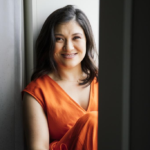
Mish Kumar-Jonson (00:11:33):
Good evening folks, and welcome to today’s webinar of What Gets in the Way of Culturally Safe and Inclusive Care. On behalf of the MHPN, I would like to acknowledge the traditional custodians of the land, seas, and waterways across the places where our webinar presenters and participants are located today. We wish to pay our respects to the elders past, present, and acknowledge the memories, traditions, cultures, and hopes of Aboriginal and Torres Strait Islander people. I’m Mish Kumar-Jonson, and I’ll be facilitating this session. To briefly introduce myself, I’m a South Indian non-binary, queer, neurodivergent, and multiply disabled accredited mental health social worker with over 15 years experience in the health and human services sector, supporting folks to navigate life through multiple ways of coming together and being able to do identity affirming practise together. In this session, we’ll be working through the learning outcomes that you can see on screen now as we explore bias as a barrier to culturally safe and inclusive care, not only how it develops, but also where it shows up, its influence and practical approaches to strengthening culturally safe and inclusive care.
(00:12:46):
Following today’s discussion, there will also be a live Q&A to stick around for, so we would love to see you there. I’d now like to introduce our wonderful panel, and let’s start with Amity. So hey, Amity, if you could please briefly introduce yourself and your role, and also share one way you’ve seen bias develop or show up in your work.
Amity Mara (00:13:08):
Yeah, thanks, Mish. Hi, everyone. I’m Amity. I use she/her pronouns. I’m a transgender Tamil woman with lived experience of forced displacement and living with disabilities, and I’m a peer worker. I run a lived experience programme for LGBT people recovering from torture and trauma. The main way we see bias show up is really the assumption that people are heterosexual or cisgender, and if they’re not heterosexual or cisgender, that their queer identities are a result of their traumatic experiences that they’ve experienced. And we know that assumption draws a long history from pathologisation of queer identities in the mental health and health space, and often has to be actively worked against.
Mish Kumar-Jonson (00:13:51):
Yeah, great. I’m really looking forward to exploring that and picking that apart together. Thanks, Amity. We’re now going to move to Dr. Averil Cook. Averil, I’d love for you to introduce yourself and your role and share one where you’ve seen bias develop or show up in your work.
Dr Averil Cook (00:14:07):
Hi, Mish. Hi, Amity. Yes, my name’s Averil. I’m a woman of colour and I have Wiradjuri and Chinese heritage as well. I’m a clinical psychologist, family therapist, and the director of Bodhian psychology. And in that work, we work with people seeking therapy, but we also provide supervision, clinical boarderproof supervisor training, and we also do consultation around human rights issues, particularly for psychologists, therapists, and organisations needing to bring the human rights factors into their work. The ways in which I see bias play out is on a very fundamental level, people not understanding that we inherently all hold bias and that it is embedded in the structures and the systems that we work within. And so without that lack of awareness, we can kind of move through life thinking that we don’t need to address it.
Mish Kumar-Jonson (00:15:03):
Yeah. Great. Thanks, Averil. Looking forward to yanning more about that. And with Erin, Erin, I’d love for you to introduce yourself and tell us your role, but also how you’ve seen bias develop and show up through your work.
Erin Joyce (00:15:17):
Yes. Hi, Mish, and hi everyone. My name’s Erin Joyce. I use she/her pronouns. I’m a social worker and community development practitioner, and I currently lead the cultural safety, equity, and access portfolio at Alfred Mental and Addiction Health in Melbourne in Naarm. For me, I think it’s, again, I agree with what all the other panellists have said so far, but really just how we’re all guilty of making assumptions about who people are and what they need based on the limited information that we have at the time, for example, during handover and those sorts of clinical encounters and occasions. So I think that’s something that we’ve probably all seen show up in our workplaces.
Mish Kumar-Jonson (00:15:58):
Yeah. Great. Thanks, Erin. I really appreciate that point of view. And now lastly, but definitely not least, Dr. Joel Wright, I’d love for you to introduce yourself and your role, and also tell us a little bit about how you’ve seen bias not only develop, but also show up through your work.
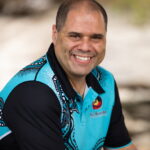
Dr Joel Wright (00:16:15):
Oh, hi, thanks, Mish. I’m Dr. Joel Wright. I’m a Wakka Wakka man. My father is Jamaican and I spent a lot of time growing up in the United States before moving back to Australia. I’m a general practitioner. I work in an Aboriginal medical service on Minjeribah in North Stradbroke Island called Yulu-Barri-Ba . We work with predominantly indigenous clients, but even within our own field, we do see lots of bias. I think one of the areas that we see bias quite a lot is in how we manage clients in assuming high risk scenarios for patients who might not necessarily have high risk, and that you can create more risk by automatically assuming risks of suicide and drugs and alcohol and that sort of stuff. And it’s always worthwhile to take a step back and while you might be seeing a patient in a heightened situation that you’re going with them through an entire journey, and it’s important to not allow to escalate situations when you don’t need to.
Mish Kumar-Jonson (00:17:19):
Great. And again, really looking forward to yarning and exploring that more as we get into it. Thank you. And thank you all for being here and for generously bringing your insights and your perspectives to this really robust discussion that I’m hoping we have. I’m going to open it up now to our audience and I’d love to know how you’ve seen bias develop or show up in your work. So you can use the QR code on your screen or you can use the pulse tab just below your screen to share your responses. You’ll be able to see each other’s responses come together as a word cloud. Now I’m going to spend a few moments really grounding us and our discussion by looking at what we actually mean by culturally safe and inclusive care, but also how bias may develop. So I’m just going to share my screen, wonderful, and talk to you a little bit about this.
(00:18:12):
So if we’re looking at bias and we’re looking at culturally safe and inclusive care, one of the things I find a lot is that people equate bias, sorry, people equate culture to race. And when we are talking about culture, we want to really talk about all the ways of being, knowing, doing, connecting, organising that is prevalent in any group, whether that be a family, whether that be a workplace, a cohort of people, or a community even, that there are many groups of people such as the queer communities, the deaf communities that have incredibly rich culture that needs to be both recognised and respected as core aspects of a person. So we know that culture is practised through social and organisational behaviour as well. And these are those shared attitudes and practises within a specific setting, but also group of people. So that’s what we’re really talking about when we talk about culture today.
(00:19:11):
So then if that is culture, what is then cultural safety and inclusive care? And cultural safety comes out of, one place that it comes out of is the Maori nursing scholarship where it was by Dr. Ramsden who said its defining feature is that safety is determined by the person receiving care, not by the provider’s sense of their own good intentions or even knowledge. And this distinguishes cultural safety from cultural competency, which tends to treat culture a little bit as a body of facts to be mastered about a group. But cultural safety really asks whether a person feels respected, whether they feel unstereotyped, and if they’re able to bring their full context, their full self into the room, it doesn’t assume that the practitioner is the expert in any way in the other person’s culture or their cultural needs, but it really allows for this co-creating of the space within which a person is approached with humility, curiosity, and openness to create a space where they’re not caricatured, stereotyped, or seen as in need of saving.
(00:20:15):
And I know that I’ll get into that more with the panellists and something that Erin Joyce has brought up before is how we can meet in the dry riverbed and how we can meet kind of in that third space. And wanting to also say inclusive care also further extends this by recognising that people are not an add-on to a system built around someone else’s default, but our legitimate experiences as intersecting experiences from the outset as Amity will also talk to in a bit. So then on the flip side, what is bias and how does it develop what we’re here to talk about today? So bias is in some ways, as people have said, is a cognitive shortcut that a feature of how humans characterise and predict a really complex world quickly and based on a set of lenses, values, learnings, and this is often automatic rather than a personal moral defect.
(00:21:06):
But when we treat bias purely as individual or as an individual failing, the conversation can produce defensiveness and shame, which I know a few of you have asked about. And this can also shut down the honest reflections of this work and what it actually needs. So bias can develop through a whole bunch of ways, whether that’s socialisation, repeated exposure to dominant narratives in the media, training, research, institutional culture. And I know Averil will be talking more about this, but it’s also through the absence of sustained relationships with what is considered to be the difference. So bias is a human process, but it doesn’t mean it can’t be looked at, but it also can’t be resolved through good intentions alone. We need intentional anti-hegemonic and culturally safe inclusive practises. So whilst it’s easy to blame bias as the cause of all issues, I really want to point out that bias is only one mechanism amongst several that shapes our assessment, our risk perception, our decision making, and the relationship that a lot of our care that we provide depends on.
(00:22:13):
So other causes also include colonial structures, opposite structures, patriarchal responses, to name a few. And as we’ve seen in the previous slide, bias operates at more levels than just the individual clinician. It’s in practises, in teams, in systems, in our epistemology, and therefore it’s our responsibility to work towards addressing bias and the impacts of it with the participant rather than at a person, which Dr. Joel will also expand more on later. And the dominant culture of normativity can really get in the way of culturally safe and inclusive practise as our ways of knowing, being, doing, and relating can get filtered through this normativity. So then why should we embed culturally safe practises across all that we do? And this isn’t a special consideration that gets switched on for people who is read as diverse or quote unquote cold or people of the global majority. It’s really to look at how can we look at our own bias and do this for everyone?
(00:23:17):
How can we just show up to people as people and allow their whole context to come through? Mainstream mental health practises carry their own cultural bias and positioning, largely shaped by Western biomedical and individualistic frameworks, and that shapes care for everyone who walks through the door, including participants from the dominant culture. So culturally safe and inclusive care, therefore, has to be widespread practise. Otherwise, we continue that hegemonic cultural beliefs and practises that we work against within our fields of practise. I’ve talked a little bit around this and I just want to quickly say epistemology is whose knowledge and whose truth and whose way of looking at the world is seen as legitimate and expert. And it looks at non-dominant cultures of knowing, being, doing as illegitimate. And I know we’re going to get into this more, so I won’t take up too much time on that, but really thinking about whose practises and ways of knowing being and doing do we see as legitimate and whose do we see as not, and how can we really start to question that?
(00:24:18):
So then coming back to our panellists, we’re going to now broaden that conversation and kind of look at where bias can show up as we can see it on different levels, as I talked about in our own practise. Joel, I know that you’ve seen bias across practise in teams, communities, also navigating services, as you said. Did you want to tell us about how that kind of shows up in that risk framing and clinical practise that you started talking about before?
Dr Joel Wright (00:24:50):
Yeah. So it’s very easy to see a client come in a crisis and you see some drug use or you see alcohol use and you see risks of suicide and it’s easy to start to tabulate in your head, okay, well, these are the risks that I need to now mitigate and I need to worry about the risk of them harming themself today, what’s going to happen? And you need to actually be able to sit back, relax, take time, build that trust, build rapport, and like we’ve said before, explain that, okay, even though I’m indigenous and Aboriginal myself, I don’t have all of the answers because just because we have the same race, we don’t necessarily have exactly the same culture. So I have to actually be honest with the patient. If I’m uncomfortable, explain to them, ask them to explain to me how I can best help them because it’s very easy to get stuck in this framework, which is it’s legalistic, it comes from the broader overarching health systems that you need to deal with this, this, this and this today.
(00:26:04):
And at the very end of the day, you might end up doing something or sending a patient in for a review that they don’t necessarily need and is not in their best interest, which then creates another barrier for the next time that patient presents. So what you need to do is to actually start breaking down those barriers that they’ve seen before and saying, actually, I’m going to listen to you today. We’re going to work together. We’re going to create a wraparound within the community itself to figure out ways so that we don’t have to escalate a situation based on perceived risks that we’ve always been told and taught. So I find that is the first thing. It’s take a step back, don’t see the client as a grouping of risks, to see them as who they are, what’s led them to where they are today, and start with a shared conversation of, okay, well, how can I actually help you?
(00:27:03):
What can I do for you today? What can’t I do for you today? And how do we best build our relationship going forward?
Mish Kumar-Jonson (00:27:10):
Yeah, beautiful. And I really want to pull out a few points and bring Amity in on this discussion around just because I’m the same race does not mean I know. Just because I show up with all of these things doesn’t mean I know exactly what that’s like, but also there’s this interplay between the systems and individual practise. And Amity, really wanting to bring you in on that of not only how those different levels interact from the individual to the teams to the systems, but also that sense of as a peer worker sharing lived experience that as Dr. Joel was saying, curious about your thoughts
Amity Mara (00:27:45):
On that. Yeah, I think it’s really interesting, right? I often think of bias as a cycle because people with their individual biases create team structures and organisational processes that also create best practise that informs a broader sector wide or professional practise, and then that gets taught to new people entering the profession. And so it really operates as a sort of self-enforcing cycle. And as with any form of cycle, we know you have to be very intentional to be able to break in. The first part of that is that intentionality around identifying the biases to then be able to counteract them. And I think the point about peer workers and lived experience is a really important one. I think lived experience can often be used in a very broad and general sense. And I think we make a lot of assumptions that just because we’re from the same community that we actually have the same lived experience or that really any two people have the same experience interacting with the system.
(00:28:48):
And I think it’s very important there that we don’t assume that our experience is everyone’s experience, but rather we use our experience to better understand their own personal experience.
Mish Kumar-Jonson (00:29:01):
Yeah, beautiful. And I think I want to draw out that sense of bias as a circle and together that sense of my experience is not their experience and even that forming together. And Erin, I want to bring you in on that because one of the things you said that I think would fit really beautifully here is how do we be tough on systems and kind on humans, right? So even as Amity is saying, we teach that, we can somehow be a part of that cycle. I’m really curious about your thoughts on structures and systems and how those are created.
Erin Joyce (00:29:36):
Yeah. So that’s one of my favourite little mantras these days is tough on systems, gentle on individuals. And it comes from the work of K.A. And I think here in Victoria, we’ve had an entire Royal Commission tell us everything that was wrong with the system that we work within, but at the same time, we know that nobody chooses a career in mental addiction health if they don’t care deeply about supporting people through some of the hardest times in their life. So we’ve got these two truths that the system isn’t perfect, that it continues to harm people, but at the same time, it’s filled with amazing people who really deeply care about supporting others. So we do have to hold those both at the same time. And I think when it comes to the systemic work that needs to happen, it’s really a nice hopeful place to start that actually the colleagues that you want to work alongside, be they clinical or lived and living experience colleagues, most of us have a pretty similar goal in mind in terms of the type of experience we would want people to have when they access our services.
(00:30:46):
And so a lot of the work that our portfolio does is around relationship building across the multidisciplinary team, thinking about that end experience that we want people to have, and how bias might show up at different layers of the system as well, whether it’s a policy level, whether it’s governance, whether it’s strategic, whether it’s operational, and creating those brave enough spaces where we can have those courageous conversations about what might be going on.
Mish Kumar-Jonson (00:31:21):
Yeah. Great. Thanks, Erin. And the thing that I’m really hearing is in some ways the system is working how it’s supposed to, but the humans are really within it trying to look at it different and make things more bias free for folks. And one of the things, Averil, I know you’ve talked about is how research and epistemology and the ways of looking and knowing and doing has inherent bias within it. And as Erin’s talking about these systems and how they’re created, I’m really interested in your point of view around the research that then leads to some of these structures.
Dr Averil Cook (00:32:02):
Yeah. To carry on from that thread, I think something really valuable to point out is that values do not mean we have that skillset. And I think that that disconnect is actually at the heart of the challenges we find in our mental health system and in our practises. And definitely as psychologists, I’m a psychologist, we think because we have these values around caring that that therefore means that everything we do is right or is human rights based in its approach. And it’s actually not. And when we look in terms of research and in practises, if we don’t interrogate deeply where our research, where our education, where our best practise guidelines come from, we move forward with this assumption that the science is correct. So when we look at the, I guess having epistemic humility, to carry on from what you were saying, Mish, it’s this understanding that the science in which we were all trained actually has its own assumptions and framework and biases embedded within that.
(00:33:02):
And that’s not something I think many clinicians, many practitioners are taught or understand. If we then do understand that, we can interrogate, okay, well, what are the aspects in which there is bias present here and where do I look elsewhere to fill that gap?
Mish Kumar-Jonson (00:33:19):
Yeah, beautiful. Thanks Averil. And to everyone, we’ve looked at some of the different places that bias can show up within practise in teams, in structures, as we’ve all said. I’d love to turn now to the impact then that bias can actually have on our work and not only on our work, but also on the people who receive the care that we provide or our teams provide. And Amity, I’m going to start with you this time. And in your work, you’ve seen some of the ways bias can influence risk management, trust, engagement, ways of putting things together. I’m really curious what can that look like in practise around access to care, around that trust and engagement and that risk management stuff?
Amity Mara (00:34:05):
Yeah, thanks Mish. I think we see it play out in quite harmful ways, particularly when we think about risk management. And again, it feeds into the trust in terms of there’s often a bias around who is trusted to look after themselves to have that sense of agency versus who is not and who gets risk management escalation at much higher rates. And we see that really clearly the certain cohorts, whether it’s First Nations people, trans people who every statistic, whether we’re looking at voluntary holds or course of the police at much higher rates of risk escalation. And that really comes to often the bias and Joel talked about this at the beginning around associating risk and bad outcomes with community and placing the responsibility for those bad outcomes with certain communities and with certain identities rather than with the systems that are failing them. And similarly, often slightly paternalistic biases around people’s own agency to manage their risk and know what is the safest way to manage their risk.
(00:35:10):
And also a bias around whether certain systems are safe for people. We know, for example, that with calling police for certain communities, that’s going to be a lot more harmful. And it’s the same with things like child protection or involuntary holds. We know being in a hospital can be a really harmful place for members of the community. Again, particularly if you’re trans or if you’re black, we know that even though these places are set up to be places of healing, the reality is it’s not how some people experience them.
Mish Kumar-Jonson (00:35:41):
Yeah, absolutely. And Erin, moving to you who works in a hospital and some of these systems where it is, as Amity said, is set up for healing. And I’m really curious what Amity pulled out, some of those assumptions, but also that anxiety that Amity touched on around difference. It can really affect those interactions or really affect care. And I’m curious about intent versus impact and your thoughts on that.
Erin Joyce (00:36:09):
Yeah. I think intent versus impact is another little mantra I’ve been carrying around with me lately.
Mish Kumar-Jonson (00:36:16):
I’m just here taking all your mantras out.
Erin Joyce (00:36:21):
But you’re right. I don’t think there are many people working in the mental health system who don’t have good intentions. The challenge is, as Amity’s pointed out, a lot of the systemic factors and barriers that limit and restrict how people can practise or that if they feel permission to practise in a way that’s not aligned with the Western biomedical model. Are there different ways of understanding people’s explanatory models of what they’re going through and how they’re experiencing distress and what they need and what recovery looks like? And the challenge is that in highly clinical environments, especially in tertiary mental health services, as Joel’s pointed out as well, they’re governed by really strict legal frameworks as well. And each state has its own equivalent of the Mental Health and Wellbeing Act that we have here in Victoria, and there’s liability along with that. And so it really is a pretty messy cocktail of a lot of different systemic factors at play that don’t always give clinicians in particular the space that they need to work in a way that aligns with their values, but also the values of their discipline.
(00:37:42):
I know as a social worker, there are many social workers working in tertiary mental health who do feel limited and restricted in their ability to work as a social worker from social work values, which are very much aligned with those of the lived and living experience movement. So yeah, I don’t have a nice answer or solution for that, but I would say that there’s a lot of us grappling with all of this together.
Mish Kumar-Jonson (00:38:08):
Yeah. Great. Thanks Erin. And I think why we’re all here on this panel is because there’s no nice bow that we can tie it in, which is I want to then pull you and Dr. Joe to say, as Erin was talking about this sense of what does healing look like for this person, what that might be within their context, I’d love to understand how bias can, you’ve talked about shaping decisions and responses, but even the work itself around healing and around care, how have you seen that impact that work? That’s just to you, Joel, if you can –
Dr Joel Wright (00:38:49):
Oh, sorry. I didn’t realise. No, no, no.
(00:38:53):
So the way that we see bias impacting us in our own work, well, I mean, I suppose the way you see it is you see it in do not attends, not showing up to clinic. You see it in patients when they do show up, they come with their own preconceived idea of what’s going to happen because I’ve now got a bias for them and they’re going to have their own biases to how they’re going to be treated when they come in. And they’re not going to take medications you prescribed. They’re not going to go to psychologists if you’re going to refer them off because they themselves have had their own patterns of behaviour from the system, from us in the past that has to be broken down. And like we said before, bias is a circle. So it goes around and around because you get one.
(00:39:43):
So you have to interrupt that at some point and to show, okay, look, yes, you have experienced these negative impacts before. Yes, the system can be harmful and you have to own that and say, look, there can be places where it is harmful, but if each one of us can provide that safe space, say, look, I’m aware that this is going to happen, you’re going to come across barriers because it’s going to happen again. Understand that you have a safe place here that you can come and talk about that again and we can try and break that down to slowly chip away at those barriers each time because bias always looks like someone not coming, someone not doing something, someone presenting in a more heightened state the next time, which then re-feeds the bias for both people and it leads to worse outcomes overall.
Mish Kumar-Jonson (00:40:35):
I think that’s such a good point around bias impacting how people engage and bias also not only showing up in the way we show up, but people bring their own biases into practise. And I think that’s such a great point to make. And Averil, I want to bring that in because there’s that tension in there, but there’s also tension between evidence, legislation, professional obligations, and bias also shows up in those kind of tensions as well. I’d love your thoughts on that.
Dr Averil Cook (00:41:02):
Yeah, absolutely. I think part of the challenge that we face is that the biomedical model has actually built the structures of the mental health system in which we work and many of our long established structures like our hospital and mental health systems. But I guess what we’re also seeing is a real mood shift in the international research, but also best practise guidelines, which drive for a greater human rights based approach to care and is very evidence based. And so we kind of have this collision point where we’ve got these old structures meeting obligations around our regulatory practises, which create natural tensions where we maybe have aspects where we’re governed by legislation, risk management, reducing risk, whilst we’re also trying to be person centred, trauma informed and guided by those. And so I guess when I’m working with clinicians navigating or systems navigating this tension, it’s really about how do you prioritise the importance of each of these factors and how can you create a justification for the client or for the decision in this particular scenario, which acknowledges all the points that you have to hit?
(00:42:13):
But it’s really hard to straddle both of these areas.
Mish Kumar-Jonson (00:42:17):
Yeah. Super, super tricky. Erin, I know you’ve just looked at a paper and just written a paper around the experiences of bicultural workers and I’d love to know how bias impacts bicultural workers being able to practise within teams.
Erin Joyce (00:42:31):
Yeah, thanks Mish. So one of the findings of our study, we interviewed bicultural clinicians across both tertiary and primary mental health settings. And one of the findings was how that influenced the multidisciplinary team and whether or not a bicultural worker model should be enacted within a mental health service. And most people felt that actually our workforce already is very culturally diverse. People already hold a lot of deep cultural knowledge and wisdom and can or could bring that to their practise. But one of the barriers was whether or not people felt safe to utilise their bicultural knowledge and wisdom in their practise. Some teams felt that it was fine, that they were already doing that, that their colleagues did come and consult them and ask them questions and they were encouraged to support consumers if they would like someone from a similar cultural background or with linguistic skills that would be helpful.
(00:43:40):
But in other teams, people said, no, I wouldn’t feel safe using my bicultural expertise. I wouldn’t feel supported. There is a certain approach and I put my clinical hat on when I go to work and then that cultural part of my identity is outside of work. And I just think that’s such a lost asset that we have within the mental health workforce where there are people working in our system who don’t feel safe or supported to bring their bicultural knowledge and wisdom to their practise. And that ultimately will impact the experience of culturally safe or responsive care from some consumers.
Mish Kumar-Jonson (00:44:24):
And I think that also goes to Amity’s point around it’s then a circle because people are not bringing their knowledge ways of doing being and knowing in, which then informs and there’s your circle. It goes to Abril’s point around, well then whose ways of knowing, being and doing is actually seen as legitimate and within the research and the ways of setting up structures. But it also goes to Joel’s point around then how we see people, how we read people, how we risk assess people is completely different to where they actually are because people themselves, practitioners can’t bring their whole selves in. So I think that’s such a lovely way of bringing everyone’s points together. Thanks Erin.
Dr Averil Cook (00:45:10):
I just wanted to add onto that actually, Erin, is that just in running a lot of training with psychologists, I find that there’s often this misunderstanding that culturally sensitive practise is not evidence-based. And I’m able to speak to that and tell them how much of an evidence based there is, but I think that’s part of the challenge as well.
Erin Joyce (00:45:33):
Yes, absolutely. And then also this culture of non-disclosure that exists in so many disciplines that work within the mental health system as well is bringing my biculturalism or my cultural knowledge self-disclosure. No, I have to be this homogenous clinician type in order to fit in the system in which I work. And unfortunately, yeah, that’s a myth that persists.
Mish Kumar-Jonson (00:45:58):
And we’ve explored some of the ways that bias can show up, can have an impact. And I’m sure that to the audience, many of you have seen this in your own work and we’d love now, all of us would love to hear from you, I’d love for you to head back to the polls tab below your screen and select the area where you’ve seen bias have the greatest impact and you’ll be able to see how others respond there too. And there’s also a QR code that you can use for that because I think it’s important that people, all of you can see the different ways that other people have seen bias show up as well. Now, like I said, we’ve explored how it can develop, the impacts of it. And so we’ve already started having this conversation of how do we respond to bias when it does arise?
(00:46:44):
And I’d want to dig into it more, but also looking at how can we continue to strengthen culturally safe and inclusive care, not just not be biassed, but how can we move towards safe and inclusive care? And so Erin, I’m going to open up with you. And one of the things that I’d love to talk about is the va is the third space, but also is that cultural humility and really here saying culture is not race, right? Culture is all of it and how we bring that and sitting maybe with that discomfort rather than relying on a checklist. Curious about that.
Erin Joyce (00:47:22):
Yes. Oh, I could talk about this all day, but I know we don’t have that long. So I’ve been really privileged to work with an amazing cultural consultant, Tavale Ilalio from Hana Culture, who introduced to me this Polynesian notion of the va, which translates to the space between us. And it’s quite interesting because that’s a thousand year old cultural concept that’s been around for a very long time. But then if you look at Western literature, such as the work of Arthur Kleinman and explanatory models in health and illness, and then you also explore work of someone like Mark Yetika Paulson who talks about the dry riverbed and how cultures have used these geographical meeting points like dry riverbeds for many generations as well. You realise that actually across cultures, there’s very similar understandings of what’s required when we meet across culture and we want to negotiate and develop a shared understanding.
(00:48:28):
And I think we can apply that at an organisational level, at a systems level, but also in the consumer clinician dynamic as well in our direct practise. Because as we’ve talked about already here, we each hold our truth, whether it’s our tertiary education and our professional development and the clinical supervision that we receive and so forth that reinforces that understanding that we have of why this person is thinking, feeling, behaving, reacting this way and what the appropriate response treatment protocols are from here. And then on the other side, you have the person, the consumer, the client coming to your service who has their own deep understanding of why they’re feeling, behaving, reacting, responding the way they are and what they think they need moving forward and what’s going to help them heal and feel like they can get the most out of life as well.
(00:49:31):
And that’s reinforced by their cultural beliefs, values, family, systems, history, et cetera. And so you really do have these two truths that are very well justified and warranted coexisting alongside one another, but you’re not ever going to be able to bring the other person all the way over to your understanding, whether you’re a 25 year clinical psychologist or a graduate. And so really this notion of the third space, the var, the drive riverbed, whatever name you want to give it, that’s where the magic’s going to happen, where you can bring your knowledge and expertise. We’re not saying to clinicians everything that you believe is rubbish and throw it out the window, but what we are saying is there has to be equal space for the consumer and their family’s carers and supporters understanding of what’s going on and to factor that into joint decision making and moving together collectively to get the best possible outcome and hopefully from the perspective of the consumer, a culturally safe experience.
Mish Kumar-Jonson (00:50:46):
Yeah, beautiful. Thanks Erin. And Joel, just wanting to pick up on that. We’ve talked about that shared understanding, that shared ways of saying, “Hey, I don’t feel comfortable about this, but I’m within this and really doing exactly what Erin said.” I’m wondering how else can we understand a person’s cultural or contextual circumstance to be able to be as safe enough as possible?
Dr Joel Wright (00:51:10):
Well, and I love that concept of the va. I think that’s exactly it, that space between it’s understanding that I might want to understand everything about your culture, I won’t be able to. The client that I’m speaking with won’t necessarily know everything about their culture. They won’t be able to understand necessarily everything about my own culture as well. And so it’s understanding that we’re all coming from partial perspectives and that having a respect and an open, willing, true curiosity and learning from that culture from each interaction with that other person so that you can actually build a shared understanding and a framework within yourselves going forward. So yeah, no, I really love that. I’ve had my own kind of personal motto. It’s there’s always three sides to every story. There’s your side, my side, and then what’s actually happened. And I think that space in between, it’s like, I’m going to think if something happened, that person’s going to think something happened, but neither of those are correct.
(00:52:17):
And being able to understand and be comfortable with the idea that I’m going to be uncomfortable because I’m never actually going to have the full story, but I just have to be open to understand, respect and listen.
Mish Kumar-Jonson (00:52:28):
Yeah. Beautiful. Thank you so much. And Averil, again, I want to continue that thread of how we can do this from a human rights based approach. But also, as Dr. Joel said, you can’t know everything, right? But also we can’t know all of the assumptions embedded in the knowledge and the structures. We can’t know it all. So then what can we do? How can we actually look at that?
Dr Averil Cook (00:52:53):
Yeah. I mean, part of the area I focus on in the work that I do with clinicians and organisations is actually deeply interrogating one’s identity and oneself. And I feel that that is the essential first piece that needs to happen. Otherwise, we can do real damage thinking we’re knowing what we’re doing. And in doing personal work, you have to do that and interconnect that with reflexivity in your professional work. And for psychologists, this is also a big shift around our code of conduct and our basic competencies that we have to have reflective practise. We also have to do our personal work. And that means understanding our positionality, intersectionality, that of people that we work with and having humility around what we don’t know and can’t know. And I find that that’s actually some of the hardest things for us to do, particularly when we are trained in a Western model of understanding or we come from the dominant culture, is to actually recognise that the way we think things are isn’t necessarily the way things are.
(00:54:00):
So I think that’s the first piece.
Mish Kumar-Jonson (00:54:03):
Yeah. Great. Thank you. I appreciate it. And Amity, one of the things that I’ve heard you say before is the way we do risk management is really for us rather than the person and the way we actually look at risk. And so then I’m curious if that’s the case, how do we adapt care to intersecting identities that Aval just talked about and actually being affirming within our approaches to even things like training and supporting teams to recognise and respond to bias?
Amity Mara (00:54:31):
Yeah. I think that’s a really good question. And I think the sort of intersectionality element is really important when we understand this stuff. I think because of the way our sectors and funding are set up, we often, we have these sort of priority cohorts and people or services might be specialists in working with certain priority cohorts, but those priority cohorts don’t recognise that a lot of people fall between multiple identities within those cohorts. And the cohort we often work with of queer displaced people, they have the sort of refugee sector and they have the LGBT sector and they face biases and assumptions and harmful practise in different ways from both sectors. And what they say to us is often, well, when I am accessing a service, I’m choosing today which part of me is going to be unsafe because there isn’t a place that’s actually set up to hold the totality of their experiences.
(00:55:26):
And I think that really speaks to the point we were talking about sort of at the beginning about the assumptions that even people within communities and specialists who work with one community can really develop about who is that community or what that identity looks like and what that represents. And that feeds a lot of assumptions people can make it. I think Averil made a really good point about why sort of reflective practise and being really intentional about this is important. And I often think it’s really good as well when you can do reflective spaces in multidisciplinary teams or have consults with people from other disciplines or who approach working with cohorts in different ways because they have a different background and you can kind of point out assumptions that each other are making. I think that sort of collaborative practise to really identify bias and assumptions I think is really important because it can be really hard to do it just as yourself because part of the thing with unconscious bias is that they are unconscious and often the most deeply embedded ones are the ones that even if you think really hard about, you can’t identify and you need somebody else to sort of hold up a mirror.
(00:56:39):
And I think that bit of it is really important.
Mish Kumar-Jonson (00:56:43):
And one of the things I’m hearing from all of us is you can’t do this alone. You can’t sit there and put on and be like, “Am I being unbiased?” We need to do it in relationship with each other, but it’s also I’m hearing it’s the in between space of not just between us and the participant, but also between us and each other. And how do we hold each other within that? How do we hold each other as culturally safe enough? And one of the things I wanted to finish with is we can’t get it safe. There’s no safety that’s perfect for people a lot of times. There is safe enough and we’re not going to get it perfect. And I know so many people are so worried. And Erin, as you said, people often don’t want to do harm and so are so worried that they’re going to get it wrong.
(00:57:28):
And so then try to get it perfect. And what I’m hearing from all of us is it’s not about perfection, but it’s about curiosity. As Joel said, it’s about openness as we’ve all kind of pulled out, but it’s also about saying, “Hey, let’s figure it out together.” Rather than, “I’m going to figure it out over here and just practise at you from this perfect place based on these perfect epistemes.” And so I’m really hearing this is deeply relational and it’s also deeply humble work because bias will show up. It’s not a personal moral failing. It will show up in our teams, in our systems, in us, but it’s about how do we stay curious and open and continue to be reflexive and reflect on, but also in practise. And so then before we move into the Q&A and thinking about everything we’ve discussed, I’m going to ask all of you for one reflection or one message that you’d like participants to take away.
(00:58:30):
And Averil, I’m going to start with you if you would like to share that one thing that people can take away from today.
Dr Averil Cook (00:58:37):
I think it’s having these conversations. I think our mental health system and certainly within the psychology practise, we haven’t been talking about this. We haven’t been thinking about it. And many of these conversations are first time conversations I’m having with other psychologists. So go away and discuss this with your peers, with your teams, with your management, with your leadership, whatever space that you’re working in, this is something that needs to get sophisticated and we can only do that through having ongoing conversations together.
Mish Kumar-Jonson (00:59:05):
Yeah. Great. Thank you. And again, it’s the ongoingness, right? It’s not the fixed point that one day you’ll go to training and you’ll come out culturally safe and inclusive, but it’s the ongoing. Yeah, exactly. I’ve ticked that box. Thank you so much everyone, but it’s that ongoing nature. Amini, what about you? What’s something that you want people to really take away from today?
Amity Mara (00:59:27):
Yeah. I mean, I think for me, the key point is that bias is really a cycle and I think sort of speaking to what others have spoken about, the need, I think, to not hold the blame on yourself for being part of a
Dr Joel Wright (00:59:40):
System
Amity Mara (00:59:41):
That has bias entrenched, but the need to also recognise that you have a responsibility within that system and within your own practise to question it and to interrogate it.
Mish Kumar-Jonson (00:59:52):
Yeah, that’s such a great point. And it’s that thing of yes, it shows up in multiple levels and it’s still our responsibility. And it’s something that Erin has said in the past of it might not be us that created the system, but it’s still us to look at. And so Erin, what’s your takeaway that you want people to leave with today?
Erin Joyce (01:00:14):
Yes. Well, my first one, you nicked off me, Mish, which was that one of the key credits of cultural humility is that it’s a lifelong learning journey, that it never ends. There is no static fixed endpoint. But the other is you have more power than you think you do. And to lean into the power that you hold, whether you are an early in career clinician or someone who’s been in the system for a long time or a lived experience worker who’s coming to shake things up. We all hold some degree of power and there are micro practises that each of us can integrate into the ways that we work that will have an impact.
Mish Kumar-Jonson (01:00:58):
Yeah. And I think that’s such a great reminder that leadership doesn’t mean you have to. Leading doesn’t mean you have to be in a leadership position. You can lead from anywhere at any time from that lens. And sometimes people feel like, “Well, I can’t do this work, this identity affirming work because I’m X and I’m not Y,” and saying, “Well, you can do it in your own practise.” And then people around you can bring that into their. Thank you, Erin. Joel, what about you? What’s a takeaway that you want people to get from today?
Dr Joel Wright (01:01:33):
Well, I think pretty much everybody’s hit on most of the really good important points that I would’ve already brought up. But I think at the end of the day, authenticity, be authentic in the fact of what you’re trying to do. We’re trying to be a culturally safe practitioner in whatever we’re doing. We are trying to do the best we can for our clients. Be authentic, be introspective, be understanding that you won’t know everything, you can’t know everything. But if you can portray to your client that you are trying, that you care, and that you respect them for who they are, that’s going to be a huge win and a huge power that you have within breaking down biases in general.
Mish Kumar-Jonson (01:02:27):
Yeah, absolutely. And as you were talking, I’m thinking, okay, what’s one thing I want people to get away from today? And I think from everything everyone said is really questioning what we think is good and bad, the way we put them into camps. And so many people have talked about practises and looking at, well, how do we know something’s maladaptive? That could have been really adaptive. How do we know that something was this? And even when we start to do some of that risk stuff or starting to put things in boxes, why does it go in that box? And as everyone has said, talking to each other of maybe that was really good at that point. So really interrogating, as everyone said, the ways that we see, do, and know things. So before we move into Q&A and all of that, I want to invite our audience now, what’s one thing you’ll take away into your own practise from today’s discussion?
(01:03:23):
Please share it with each other in the chat. And I think sometimes that sparks someone going, “Oh, that’s actually a really good point. I didn’t pick up on that.” Or, “Yep, that’s a great idea. I can take that back.” So please do share with each other. I think this is a really important way we learn together as we’ve all said. I just want to say thank you so much to our panel for today’s discussion. I’ve really enjoyed it and thank you to everyone for watching. Please stay with us for the live Q&A that’s coming up next.
Bias is a normal part of being human. Yet even with the best intentions, it can act as a barrier to culturally safe and inclusive care, particularly when it is difficult to recognise or challenging to respond to.
Join MHPN for a multidisciplinary discussion exploring how practitioners can better understand bias, recognise when it may be influencing care, and respond in ways that support culturally safe and inclusive care.
Attendees will gain practical insights from diverse perspectives that support reflection, challenge assumptions and strengthen collaboration across disciplines, while building confidence to engage with discomfort and uncertainty as opportunities for growth and ongoing learning.
Arthur Kleinman’s work on Explanatory Models
Kleinman, A. (1980). Patients and healers in the context of culture: An exploration of the borderland between anthropology, medicine, and psychiatry. University of California Press.
A seminal paper introducing the concept of cultural humility as a lifelong process of self-reflection, addressing power imbalances, and fostering respectful partnerships with individuals and communities.
Tervalon, M., & Murray-García, J. (1998). Cultural humility versus cultural competence: A critical distinction in defining physician training outcomes in multicultural education. Journal of Health Care for the Poor and Underserved, 9(2), 117-125.
Psychology Board AHPRA Fact sheet: Professional competencies for psychologists
Mark Yettica-Paulson’s Intercultural Framework
https://www.supernativeunlimited.com/inter-cultural-framework/
Further resources from Dr Averil Cook can be found on her website: Bodhi & Psychology
Webinars
Neurodecolonization And Mindfulness With Dr. Michael Yellow Bird
Colonization, Decolonization, and the Medicine Wheel – Dr. Michael Yellow Bird
An exercise for teams to help set healthy boundaries
Zone of Fabulousness – Vicky Reynolds
Documentary Series The Eternal Song – SAND
Books
Decolonizing Trauma Work – Linklater
My Grandmother’s Hands – Resma Manakem
Decolonising Therapy – Dr. Jennifer Mullan
Podcasts
Decolonising your practice: Small steps toward anti-oppressive therapy
The Mental Health Professionals’ Network’s professional development activities are produced for mental health professionals. They are intended for use as a guide of a general nature only and may or may not be relevant to particular patients or circumstances. The subject matter is not exhaustive of any mental health conditions presented. The information does not replace clinical judgement and decision making. If you apply any recommendations, you must exercise your own independent skill or judgement or seek appropriate professional advice when so doing. Any information presented was deemed relevant when recorded and after this date has not been reviewed. No guarantee can be given that the information is free from error or omission. Accordingly, MHPN and its employees and agents shall have no liability (including without limitation liability by reason of negligence) to any users of the information contained in any MHPN activity for any loss or damage (consequential or otherwise) cost or expense incurred or arising by reason of any person using or relying on the information contained in MHPN activities and whether caused by reason of any error, negligent act, omission or misrepresentation of the information.
Claim CPD points by the following methods
The Mental Health Professionals’ Network (MHPN) respectfully acknowledges the Wurundjeri and the Boonwurrung people of the Kulin nation, the Traditional Owners and Custodians of the land on which our office is situated. We also acknowledge Traditional Owners of Country throughout Australia and pay our respects to their Elders past and present. Find out more.