Connecting mental health practitioners to improve multidisciplinary mental health care in Australia.
MHPN’s interactive webinars feature case-based discussions and Q&A sessions led by top experts, modeling multidisciplinary practice and collaborative care.
Mental Health in Practice is a podcast for health professionals working across the mental health system, featuring conversations grounded in real-world experience. Each episode brings together perspectives from clinical practice, research, and sector expertise to explore contemporary mental health care.
Extend your knowledge and explore the following curated compilation of webinars, podcasts and networks, highlighting selected topics of interest.
Connecting mental health practitioners to improve multidisciplinary mental health care in Australia.
Mental Health in Practice is a podcast for health professionals working across the mental health system, featuring conversations grounded in real-world experience. Each episode brings together perspectives from clinical practice, research, and sector expertise to explore contemporary mental health care.
MHPN’s interactive webinars feature case-based discussions and Q&A sessions led by top experts, modeling multidisciplinary practice and collaborative care.
Extend your knowledge and explore the following curated compilation of webinars, podcasts and networks, highlighting selected topics of interest.

Disclaimer: The following transcript has been autogenerated and may contain occasional errors or inaccuracies resulting from the automated transcription process.
Dana Shen (00:00:00):
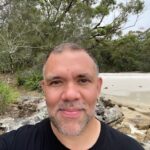
Good evening, everyone. Before I get started, I’d first of all like to acknowledge all of the countries that we are on tonight. MHPN would like to acknowledge the traditional custodians of the lands, seas, and waterways across Australia upon which our webinar presenters and participants are located. I’m coming from Kaurna land or Kaurna Yerta. We wish to pay our respects to the elders past, present, and acknowledge the memories, traditions, culture, and hopes of Aboriginal and Torres Strait Islander people. So welcome. Welcome everybody to this wonderful session that we’re going to be having tonight. Welcome to people that are here live and to the viewers who are watching the recording. I’m Dana Shen, and I’ll be moderating tonight’s session. I’m Aboriginal Chinese. I’m a descendant of the Ngarrindjeri Peoples and a consultant based in South Australia. I am joined tonight by a wonderful panel, Shirley Young, Aboriginal Social Worker.
(00:01:06):
Grant Sarra, longstanding cultural advocate dedicated to truth telling and justice. And Lou Turner, Pitjantjatjara Father, amongst many other things. You’re really going to enjoy tonight. It’s going to be wonderful. So what’s this all about this time? The second webinar builds on this by exploring the clinical application of the social and emotional wellbeing framework, guiding practitioners to balance clinical and cultural knowledge, address common implementation challenges, and embed culturally informed approaches throughout therapeutic and care planning processes. So it’s a lot about practise tonight that we’ll be talking about. You would’ve already seen the learning outcomes for this webinar already, so I won’t go through each of those, but just to say that these are key things that we’re focusing on the practise tonight and really taking the social and emotional wellbeing framework and how you do that in your work. Next slide, please. As it’s so important to the webinar series, I wanted to briefly introduce the social and emotional wellbeing framework.
(00:02:13):
We also call it the SEWB framework or wheel. So some core things that are really important to this for your practise. When we talk about social and emotional wellbeing in relation to First Nations peoples, Aboriginal and Torres Strait Islander peoples, we’re talking about a holistic and collectivist approach to health and self that is held within family and community. The domains that you can see there, and there are seven quadrants. Whilst these look separate, they’re deeply interconnected. So you can imagine that the lions aren’t there in a sense and that they’re moving in amongst each other. They’re part of the life of a person. These are surrounded by determinants of health and how the domains are expressed can differ because of the diversity of culture and histories because of our differing identities and experiences. So all of that is what is held in the social emotional wellbeing framework, and tonight with a panel, we’ll be exploring that in practise.
(00:03:19):
So I’d like to get started with meeting our panellists and having a bit of a yarn with them tonight about that. So first of all, I’d really like to start with Grant. Grant, before we get into the more clinical aspects of this, I wondered if you could talk a bit about what social and emotional wellbeing means to you first.
Grant Sarra (00:03:58):
The actual framework, I was looking at it in the context of a pole of life kinship structure. So social, emotional, wellbeing. If we look at it in the context of who I am and where I come from, I’m a descendant of my mother and my father, and they’re a descendant from their parents and so forth. So I bring in children into the world and they will bring in grandchildren. And my grandchildren, theoretically, culturally, will become mother figures, father figures to their old people. So they have an obligation and responsibility to be in their presence and to be available to them to get food or talk or laugh or just bring them life and extend their life and their spirit and their energy. So it’s a holistic journey of life that we all travel through. And that’s where kinship and maintaining a strong sense of kinship based on caring and sharing and respect for each other beyond the I, me or my, is crucial because that’s where socialisation.
(00:05:03):
We become socialised to think and feel and behave from the parents, and we pass that on to the children. But in the sociological context, we adjust to the technology that presents in each generation. Anyway, so social, emotional wellbeing is not just reference to one generation, it’s a collective application to a number of generations of people.
Dana Shen (00:05:28):
Thank you, Grant. And Lou, from your perspective, and you’ve got a lot of different things to draw upon, you’re Pitjantjatjara , you’re a Pitjantjatjara father, you’ve done lots of work in social services areas. I wondered if you could talk a little bit about what social and emotional wellbeing means for you and in your life.
Lou Turner (00:05:49):
Yes. Thank you, Dana. And it’s a pleasure being back here for the second webinar and to continue the conversation into the clinical application and understanding of social emotional wellbeing. So for me, I probably extend on the lovely introduction you provided, Dana, and I look at social emotional wellbeing as that fluid living framework of wellbeing and care that is held and understood by Aboriginal and Torres Strait Islander peoples. So I look at it and I talk to it as an ecology of care, of care and connection because it’s all about the connectivity and the intersectional connectivity on those domains in the social and emotional wellbeing model. And there’s a saying that’s there that we understand, that we use and that we share of those ways of being doing and knowing. So it’s existing in this framework of social emotional wellbeing and our ecology of care. So it’s a framework and it’s a model that’s adaptable across any care setting, any therapeutic care setting.
(00:06:59):
And for that matter, non-therapeutic care setting, because it’s a living, fluid living framework.
Dana Shen (00:07:07):
Thanks so much, Lou. Shirl, I will be coming to ask you about the clinical side of this, in particular in relation to how we hold Western clinical practise and social and emotional wellbeing. But before we do that, could you talk about what SEWB means to you personally first?
Shirley Young (00:07:26):
Yeah, thanks so much, Dana. I reiterate what the gentlemen have said. I want to say that absolutely agree that it’s about our kinship systems and our broader systems. For me, when I think about the social, emotional and wellbeing framework, I think about how we actually implement that with families, how we see that play out in the work that we do. If you were to put community in that circle where it says self, I wonder what that would mean for community social emotional wellbeing and how we think about that. And I also think about how we actually use the social emotional wellbeing framework to actually implement across systems, what that actually means that we think about when we’re operating in the super framework, how we actually work to that, what we’re thinking about, and how we actually apply it, and how we write about the things that we’re actually talking about.
(00:08:17):
So for me, I would love to see this particular framework rolled out in a broader context so that it’s not something that we just apply every now and then, but we actually utilise all the time. And it helps inform our thinking and our planning around how we would like our customers or clients to access our services and what it means they’re actually going to get from that service. And also to know that this particular framework helps staff to write in lots of stuff about what’s happening from a cultural perspective. So when I think about it, that’s what I’m actually thinking about.
Dana Shen (00:08:55):
Thank you, Shirl. Well, this is great. And you’ve started to go into this in some detail, but I think the first thing I’d love you to talk about is what is the attitude, the way of thinking that needs to be taken when we weave together, when we weave together Western clinical practise and social and emotional wellbeing, because I think often it’s thought about as something separate. Can you talk a bit about that first?
Shirley Young (00:09:25):
Sure. So what we often see is that when practitioners are working away, they think that there are these two separate models that should be operating. One is from a clinical perspective, and that often comes from practitioners when they’re thinking about their casework and the way we describe what we do. And then there’s a piece of work which is cultural work. And quite often there’s this elephant that’s actually in the room where we believe for whatever reason that the clinical work needs to be represented way more than the cultural work. And certainly when you actually look at files, and I’ve read many files across the state, that is actually what we see is that people are very capable of actually writing about clinical information, but when you read the file, there is a distinct lack of cultural information that’s actually been recorded. And what I’ve actually learned is that there’s an ongoing argument that actually takes place around what’s more important, and so we get one or the other.
(00:10:26):
But what I would like to actually challenge people and actually say to you is, why do we have to have that? In an actual fact, I’ve worked with heaps of people around the state and across the nation and asked them to look at the SUV model and work out what it is that they do that doesn’t actually fit into this model. And when it boils down to it, they work out actually everything that I do does fit into the model. And for Aboriginal people, we are writing about these topics anyway. They’re topics that are actually really important to us. So there can be a merging, a really beautiful merging of the clinical content and the cultural content. In actual fact, if I’m being honest, I don’t know how we actually pull that apart. It should actually be weaved into everything that we do, and there’s no need for this discussion around what takes place first.
(00:11:17):
It should actually be both culture and clinical thought processes weaved together right from the word go and throughout.
Dana Shen (00:11:26):
Thanks, Shirley. We’ll be coming back to you to talk a little bit about some of the very direct practise. So maybe some scenarios and where you’ve seen that happen, but I’ll come back to you. Grant and Lou, it’d be really great from both of your perspectives, and maybe we’ll start with Grant first, where you have seen social and emotional wellbeing in practise, and this could be through your own work or just what you’ve observed, how have you seen that done well in the context in which you’ve worked, wherever you’ve worked? So Grant, I wonder if I could start with you.
Grant Sarra (00:12:06):
Probably examples, I suppose. Early days, I remember getting involved when I first got to meet up with Nancy and others in the Save the Children’s space, there was that cultural input from the Nancys and others that were actually reflecting the cultural, social, emotional wellbeing requirements, but that was driven by Nancy and another person by the name of Lisa Hillen, who was two people come and they drove a process. And that was that cultural leadership external to the agency, but they embedded it and they run with them and so forth. In a current context, sorry, beyond that, then the Healing Foundation from conversations where we had healing forums in all different parts of Australia, from our undercountry, were traditional custodians, people in that space and where English was their second, third language. And we talked to social, emotional wellbeing through a cultural lens. And we talked about that melding into a conversation about law, culture, custom.
(00:13:12):
And with that come social, emotional wellbeing and obligations, responsibilities, all of that. We did that in the Torres Strait as well, and we melded cultural law with public policy processes. So we were always at the forefront, the social, emotional wellbeing was at the forefront of where we were, because it goes back to what I talked about last time. As one Aboriginal person, we don’t have the right responsibility, nor are you obligated to speak for all Aboriginal people or Torres Island people. So it’s being very conscious in our mind that when we’re on someone else’s country, we don’t start really big noting ourselves and start talking over people. This is their story, their place, their social emotional wellbeing. And in a more recent time, I could probably refer to Murraymar Aboriginal health as a good model, where that’s all entrenched. And that’s under the leadership of Richard Weston and his team.
(00:14:12):
He’s got a really great kinship-led team, and they all value and respect each other, and their patients are their priority. So it’s not always perfect, but they’re investing in that process, and it’s culturally informed, trauma-informed, healing focused, which is really great.
Dana Shen (00:14:31):
Fantastic. Thank you, Grant. And how about from your perspective, Lou? In whatever context you want to talk about, where have you seen social and emotional wellbeing really applied?
Lou Turner (00:14:43):
Thanks, Dana. Yeah, look, like Grant, if I have to reflect, it’s all of those wonderful spaces that I’ve had the opportunity to work with and work alongside others with community from the work with the Healing Foundation, work with emerging minds, work with Snake, and work in the mainstream space as well in public health. But one thing that connects all of those approaches in the work is that relational approach that Grant talks about and Shirley talks about. There’s no blending, no, I guess discerning, there’s just the blending and a melding of our relational approaches, our obligations of care. And when we think about ourselves as practitioners, what is our obligation of care? General practitioners have a hippocratic health. As practitioners working in the mental health space and social-emotional wellbeing space, we’ve got to think of that first pillar of causing no further harm. So when we think about ourselves and bringing in our practise and decentering ourselves and connecting with applications of social and emotional wellbeing, it’s purely approaching that through a relational lens, which will be, I think, the gateway to letting that really flow and connect with your practise, but also just connecting with others through a relational lens, whether it be clients, colleagues, and communities that we work alongside.
(00:16:17):
So the work spans out into many different formats. So models of care, programme logic, I can think of those community engagement strategies that have had the absolute pleasure of working with Grant in creating with community that focus on social-emotional wellbeing models of care. So all of that really is framed in a relational approach of care, which are the domains of care in that social-emotional well-being model.
Dana Shen (00:16:50):
Fantastic. Thank you, Lou. And just for those that are watching tonight and also those that are listening to the recording, there was a few different terms that just came up, and I just wanted to make sure that people understood what was referred to. So we referred to Marimar, that’s an Aboriginal community-controlled health service. We have Snake. Snake is a peak body, and it’s a peak body for child and family services. And we had the Healing Foundation. The Healing Foundation was established particularly to support those of the stolen generations. So please anybody on the panel correct me, but I just wanted to make sure that everyone knew what we were talking about. So great. Thank you, everybody. Okay. So Shirl, there’s been from registrants, a lot of questions about practise. They’ve directly asked, “How do I do this? ” So I wondered if you could talk about it in a few different ways.
(00:17:42):
The first one is just … Actually, let’s step this out. Let’s think about social and emotional wellbeing along a continuum, and I’m going to ask you a few questions along the practise continuum. Okay? Okay. First step, you get some information about a client.What’s the social and emotional wellbeing lens when you’re looking at a file? Let’s step one.
Shirley Young (00:18:08):
Okay. So when I look at a file, often there’s not much in there that is directly related to cultural stuff. But if you actually look at the social emotional wellbeing and it talks about all those different connections, right? And I actually can consider some of the things that are in the file that actually already appear to be connected. You can actually see some thought processes around connection to body and behaviours. Often people are actually describing that. What I do find though is that they’re describing it from a deficit model. That’s usually people are describing what’s wrong generally. I don’t see them describing from what is strengths or from a protective factor. But you do see people writing things about mind and emotions. It’s always in there. They’re writing it from a clinical perspective often, and then they may have some conversations in there about kinship and family, and they sometimes have a little bit about community, what community looks like.
(00:19:14):
But generally, again, not from a strength-based perspective. And all of those other bits, connection to countries, sometimes they might actually write, “This is a nookanoo woman living in Adelaide,” or there might be something written about that if somebody knows how to answer that. And generally, there’s not much written around spirituality or ancestors at all. What there is lots written about is the social determinants, the historical determinants often, and sometimes political determinants and not much about cultural determinants. So there’s lots of stuff that’s actually problem saturated is what I’m trying to say, and that’s what you see in a file generally. And not much explaining about what somebody’s experience or expression might be in relation to how they experience culture, how they live within a cultural context or anything like that. Generally, it’s just talking about a health matter or a child protection matter and what’s happening in that context.
(00:20:18):
And what are finders, when we write that way, we miss a bunch of opportunity to describe culture.
Dana Shen (00:20:25):
So if you imagine now that if you are a supervisor for the person that wrote that information, what advice would you give them in terms of the next steps about how they write that information? What would you say
Shirley Young (00:20:37):
To them? Yeah. Well, I would actually suggest that somebody, you sit with a social emotional wellbeing framework and you actually begin to view the information that you have through the social emotional wellbeing framework. I know that you have assessments and I know that you have particular information that you have to gather, but what would happen if you are actually looking at it through a social emotional wellbeing framework and thinking connection to body and behaviours? What does that mean from a cultural perspective? Connection to mind and emotions. What does that mean from a cultural perspective? Connection to family and kinship. It begins to change the kind of thing that you actually write and really begins to author a different story, very much so. Do we not write those problem saturated stories that we have to capture for risk and all the rest of it? Yes, we still have to write that, but I think we have to actually balance it from a cultural perspective.
(00:21:33):
So if we’re not actually capturing culture, we’re often missing out all of that strength-based information that goes along. And for Aboriginal people and Aboriginal staff, they will be thinking about these things. That will be the most important thing that they’re often thinking about. What does it mean if this community member’s wellbeing is not good? What does it mean if they have illness in their body, and what does that mean for the social emotional wellbeing and the greater connection to community? So they will be thinking that way. I guess what this does is turns things on its head a little bit, and it actually has the clinical practitioner having to think more. So if I was in supervision with somebody, I’d be actually asking them, “Okay, let’s think about how we can actually apply this. Let’s actually write everything that we have to write in our case notes, view through this framework, and then let’s see what happens in terms of culture turning up in our file.” Does that make sense?
Dana Shen (00:22:32):
It certainly does. So we’ll come back. I’m going to go through step-by-step now of that journey, but I’d like to go back and just get perspectives from Grant and Lou. So Lou, one of the things that you talked about was you talked about the importance of relational practise and that kind of connecting with people. And I wondered first, Lou, if you could talk a bit about when you see good relational practise, so you’re standing back and you’re watching what’s happening here, what does it look like? What is good relational practise?
Lou Turner (00:23:03):
Thank you, Dana. Look, I’m going to reflect on and call upon my lived experience as a parent and a father in supporting my children and their social-emotional wellbeings and working alongside a team of practitioners. So if I have to look at what social emotional wellbeing looks like when it’s working well, it’s looking like when individual practitioners work alongside each other in a team sense, that team for the child in understanding the holistic needs. So social emotional wellbeing, this model is a holistic model of understanding the lived experience, those areas, those domains that we say of health and wellbeing of care. And if we translate that to directly link that to what Shirley was discussing is we’re often looking at the impacts to that. We’re often looking at in the deficit story, what behaviours, what challenges, what deficits are coming through in an engagement with an individual who is potentially living with trauma, a trauma story, living with challenges that are directly related to all of these domain areas.
(00:24:24):
So you can’t separate one area from another. It’s all an intersecting living web. So when I think of my children and their needs, we talk to that when we’re parents, we talk to, it might be a focus with a paediatrician, but it’s always about their wellbeing and how it’s related to other areas of their life, like their relationships with their siblings, their relationships with their grandparents, their relationships with their peers and in school settings and that. So it’s understanding the lived experience. And I think we spoke to that in our first webinar session. It’s the relationship not just with people, but their stories. And I think we all spoke to that really in a way, but it’s connecting to that, connecting to the lived experience and the stories, and then using this model to then take that in, receive that, and then moderate a response alongside some of those challenges, alongside some of the behaviours.
(00:25:35):
So behaviours are a language as we spoke to as well. Behaviours are a language and a response to challenges and impacts and traumas. So it’s taking that in to note that as an impact, but also note that as an opportunity to talk to as well through our social-emotional wellbeing lens.
Dana Shen (00:25:58):
Thank you, Lou. Grant, it’d be great to hear a little bit from your work. You do a lot about justice, truth-telling, and so much of that work is relational practise, it’s in relationship, it’s about relationship. I just wondered if you could talk about when that’s working well with Aboriginal people, First Nations communities, Torres Strait Islander peoples, what does that look like? What have you seen when it looks like it’s working really well?
Grant Sarra (00:26:29):
As I was listening to Shirley, and Lou, I was writing down different notes from relational practise to kinship connection, to empathy, to the policy framework of thinking in my mind, which is your child is my child, your children are my children, and that we live that, we breathe that. So any child that comes into a clinical space, they’re your child and you give them the service that you would expect someone to provide. You can humanise that to … And as ludic, when you become a parent, you have this unconditional love for your children. And whether we like it or not, we can argue and say our children are
(00:27:21):
The best of the best in our minds. We have to agree with that. We have this aspiration. We want them to be the best of the best. When they hurt, we hurt. We experience the concept of unconditional love. And then we have, as a father of two sons and then a daughter, my daughter was my angel baby, and me as a man, total 360 degree, I saw a whole lot of women’s issues, women law through my daughter and her evolution into womanhood and all that sort of stuff. So the clinical space, you’ve got a whole lot … One of the things I wrote when Lou was just wrapping up was the different layers of behaviour that present in a clinical space. So you might be dealing, for example, with a child who is displaying some sort of behaviour on a spectrum and they’re perceived to be misbehaving, but the mother who could be there, she’s trying to do the right thing and she feels uncomfortable because she doesn’t know how people are going to perceive her child’s behaviour.
(00:28:30):
She’s used to it. It happens all the time, but they’re now in this public space, so there’s that structural element and they feel uncomfortable and feel they’re being judged. But from a clinician’s point of view, it’s not just the child in this case, the mother too carries trauma. The mother too carries a lot of thinking and feeling and behaviour. So that’s where the social emotional wellbeing needs to wrap around the mum and the bub in that case and humanise that. And then you establish that relationship with the mother and you build that interconnectedness between mother and child, but you make them both feel safe and comfortable and respectful in that space. That’s the way I’d see it. And really, that’s just that element of your child is my child. And every time a child comes in, I see them as my own child and I have certain expectations and it’s not deficit-based.
(00:29:26):
Every child is unique, special, which I talked about last time. And as adults, we have an obligation, responsibility to be good role models in the presence of young people in this world that we live.
Dana Shen (00:29:40):
Thank you, Grant. Shirley, I want to come back into the practise and that kind of journey of the practitioner. So I’ve got a few things to throw in here for you to work with. So first of all, this is going to be the first time that you are meeting a family, you’ve seen the Information, et cetera. And you talked a bit about that and the lens that you would place on that. One of the registrant questions that came through was also about timeframes. We’re really busy, timeframes, et cetera. How do we build the rapport? How do you bring this kind of thinking when there’s deadlines, when there’s KPIs, when there’s things you’ve got to meet? I just wondered how you have dealt with that as a practitioner, if you can talk a bit about that.
Shirley Young (00:30:30):
Look, we work in the real world, don’t we? And there is pressure everywhere to actually get stuff done. I get that. I know that there’s deadlines and all the rest of it. I think there is important lessons about working with Aboriginal people and Aboriginal families. And some of that is about actually allowing time and space to be able to talk. So I understand why you’re actually asking that question. It is actually important. However, if we actually just try to apply a Westernised framework, we know that Aboriginal families don’t return. They get anxious and nervous about using our services. And it really doesn’t actually always help to rush things. If you can book a longer appointment, I actually really encourage you to do that. But I want you to be thinking about the social emotional wellbeing framework from the moment they come in. Once you’ve actually learned what’s in there, you should easily be able to actually apply it just like you would any other framework.
(00:31:27):
So the questions that I would be asking of families or the way I would go about introducing would be very, very similar, except I would actually be thinking about cultural context all the way through. So for instance, I’d be introducing myself as Shirley. I’m a Nookanoo woman. Thank you for coming to the service. Can you tell me a little bit about your Aboriginal language group? And they might actually say to me, “Well, you know what, Shirl? I didn’t actually grow up in culture.” And right there, I would actually think, okay, there’s one of those historical things that have actually happened for them. There’s an experience that’s actually happened to them and there’s part of the framework right there. You can actually start writing about this person’s culture right from the beginning. Okay? It’s there. You just have to be looking at it and knowing what it is and then start to apply it.
(00:32:22):
If somebody says to me, “I didn’t grow up in culture, Shirl,” I’d say, “Hey, can you tell me a little bit about what happened there?” And you know what? They’re usually pretty happy to tell me. They’ll usually say, “Well, Shirl, my parents was part of the stolen generation.” And then we’ll talk a little bit about that. Okay, so where did you grow up? So for me, I’m talking about it right from the start and basically weaving it into every little space that you can imagine. So tell me, why did you come here today? I’ve done lots of work in child adolescent mental health and I say, “Hey, why did you bring young Johnny today?” “Oh, I’ve brought young Johnny because Johnny is not sleeping well and he’s hearing voices. “Okay. So I start to actually think about this framework from this context, from the framework, and then I start to think Jewel processes.
(00:33:18):
Okay? I think, okay, so Johnny’s actually hearing voices. “Hey, can you tell me about Johnny’s experience of hearing these voices?” And then I might be thinking, “Is this cultural phenomenon or is there a medical thing going on here?” And then I’d actually want to know, “Hey, how does Johnny experience that? Does it really upset him?” Because if it really upsets him, we need to think about what to do. So all the way through, you can be having conversations that both fit with culture, but also cover off your clinical stuff. Can I use this in another context, Dana, just to explore? Please. Okay. So I’ve done lots of work with children in out- of-home care. Okay? Now, when you talk to people about out- of-home care and you say to them, “Well, you’ve got an Aboriginal child in your house here, tell me what you do to maintain culture for this child.” And they say, “Oh, we’ve got pictures on the wall and we go to NADOC and all the rest of it, ” which is fabulous.
(00:34:13):
That’s a fantastic start. When we actually get talking though, I ask them, “So what sort of framework do you actually run this by?” And they say, “Oh, well, we just do the best that we can. ” So what we do is introduce the framework to the team, to the care team, and we say to them, “Here’s the framework. Let’s talk about what each part of the framework means.” And then I say to them, “I wonder from this framework, how could we actually keep Johnny connected or whoever connected to culture?” I want you to use each piece of the pie and I want you to think about each section. I also want you to think about what gets in the way, what this child’s experience has been, how they’ve expressed culture previously. And if they haven’t, how can we help them actually have experiences with culture?
(00:35:05):
And I almost get them to do a bit of a lesson plan at first. And then I actually also say to them, “Well, that’s a great plan. Let’s talk with this child now that we’ve got our head around this particular framework. And how do you think the child would like to actually be part of this plan? How can we actually get them involved?” That first section was about getting you using it. Now I want you to actually talk to the child about it. How could you go about that? And so all of a sudden we’ve got this framework that’s actually filled out. You can almost use it as an assessment about what’s been happening for the child. You can use it to actually set goals. You can use it to actually know, are you being successful? How have you applied it? So rather than just having pictures on the wall, you’ve all of a sudden got a very, very detailed plan, a very detailed assessment, and a very detailed set of goals that you can go ahead and start to actually implement and then monitor them because it’s very easy to actually say you’re going to do something and then not do them.
(00:36:04):
But if you’re actually setting goals and you’re monitoring them for quality assurance, then you tend to actually do them. So that’s how I’ve utilised this particular framework within out- of-home care. What I’d like to actually challenge you to do is to think about as a practitioner, what area you actually work in. And Grant was talking about his work in aged care, but you might be in, I don’t know, a health setting or whatever. I want you to think about particularly the setting that you sit in and how you could actually take this framework, make it into, I guess, an assessment that actually looks at the whole Aboriginal person and everything that sits around that person and actually think about it from that context, apply it to the context that you have. And I think Grant probably has some pretty amazing ideas about what he would’ve done within an aged care sort of setting.
(00:37:01):
It fits everywhere, folks, and it actually helps you to streamline your job. And I do believe that eventually it saves you time because you’re actually working to something and hearing stories and staying curious about it.
Dana Shen (00:37:15):
Thank you, Shirl. I just wanted to let you know that I want to come back as a next question for you, Shirl, to really talk about safety planning, risk management and SEWB. So if I can just leave that with you just to have a bit of a reflection on. And I’d like to ask a few questions of Lou and Grant in particular, because both of you have talked about being fathers and being parents. And I’d really love to hear from both of you, and this is really in the context of identities. So I want to talk more about different kinds of identities, but in particular for both of you, when we think about social and emotional wellbeing and doing good work, good work in our different services, what are some of the considerations that need to be given in relation to fathers in this context?
(00:38:13):
So Lou, I wonder if I could start with you first.
Lou Turner (00:38:17):
Thank you, Dana. And I’m always linking the storylines and the threads of the conversations. And stepping off from Shirley’s discussion points there, I’ve been thinking about how do we turn that deficit approach into the strength approach and how do we apply social emotional wellbeing, the model into that? And it’s through that deficit analysis lens is the opportunity of identifying what is missing, what is missing or what is buried in that person’s experience through that model. So yeah, look, I’m looking at, for example, the questions of asking around connection to community. Every single domain is a conversation stream to understand what is potentially there as a strength or what is potentially missing and what is being impacted on. So yeah, sorry, done. I got lost in that sort of stream of thinking. A beautiful start.
Dana Shen (00:39:27):
Yeah.
Lou Turner (00:39:27):
And
Dana Shen (00:39:28):
Take what you’ve just said. Is there particular things that you think are important in terms of thinking about fathers?
Lou Turner (00:39:35):
Father. Yeah.
Dana Shen (00:39:37):
Yeah.
Lou Turner (00:39:37):
Most definitely. So looking at, and I really take hold of a lot of the things that Grant says around our obligations and responsibilities of role modelling. So as a father and as a descendant of stolen generation survivors and understanding my identity as a father, the storyline of my mother who was removed from her mother and her mother who was removed from her mother, the lessons of care and the experiences of care that weren’t understood, that weren’t taught, that weren’t handed down, and then that was inherited to me. So as a father, looking back into my mother’s and my grandmother’s story, I look back into that is the deficit story, but the strength in that is around reclaiming and reauthoring and understanding the obligation of care. And in the context of this time right now, there’s so much more different complexity to consider what impacts on being a parent, being a father.
(00:40:52):
But I think it’s as a father to a daughter, what do I role model as a man, as a father, as that first relationship with a male, what do I need to ensure that I provide my daughter that frees my family storylines from that trauma story? So I look at the intergenerational healing opportunity and to reconcile some of those learnings from the past. And my opportunity now is to role model as a father and a parent to provide what maybe wasn’t provided, but to understand through love and care and compassion what my mother provided me and to take that and to amplify that as a father and as a man and my relationship with women, my wife, my sister, my aunties, and connect my daughter to those strong relationships of care with other Aboriginal women.
Dana Shen (00:41:57):
Thank you, Lou. And how about you, Grant? Yes. Similar question, but wherever you want to start and wherever you want to take it, it was really around identities, what needs to be thought about from a practitioner, what a certain experience that you might want to share with people.
Grant Sarra (00:42:15):
Yeah, no, I’ll start with complimenting Lou on his deadly little conversation. Then that’s true from the heart. And that’s the important thing there, I think. I always talk about when we think and when we speak from the heart about what we know, feel, and believe, we’ll always be fluent. And Lou, is that a very fluent explanation of where it’s important? Can I go back to that question you talked about around the time issue? Yeah.
(00:42:48):
I want to qualify that. We’ve got to understand that the trauma, intergenerational trauma that’s being presented, has been created by a Western system. So this Western system and bureaucracy within this democracy has got to accept some responsibility for the systemic issues around trauma and social emotional wellbeing. So I’m not interested in hearing conversations around it’s a time issue. I understand the practicality of that, but let’s not dehumanise and normalise things in the wrong way. Let’s keep strength-based. Let’s focus on … I would be very concerned if the system that suppressed people now starts to talk about a revolving door type approach or a human conveyor belk where people just come in the clinical space and they’re just churned out as just animals, really. If that happens, that’s a real big problem. When it comes back to the father role type thing, I was conjuring up in my mind earlier listening to Shirley and Lou and yourself, Darna, there’s a traditional cultural role that a father plays within a family structure.
(00:44:12):
Now, say hypothetically, Lou and me are brothers. So by skin and blood and ancestry, we’re brothers. I lose children’s father as well as uncle, but I need to know when I become father figure or uncle figure. Now, as an uncle father figure, if I see Lou’s children going off the rails, my responsibility is to just steer them back onto the right track, steer them back on the right track because I know that’s what my brother Lou would expect. I have the same level of unconditional love for Lou’s children because they’re my children. Now, where it becomes a cultural complex issue is the avoidance stuff. Now, if I cross over, I’m uncle, father figure, I’m not father figure. Sorry, I’ve got confused in that. I’m uncle father, not father, uncle. So if I cross over and try and assume the role of Lou as father, I’m crossing a line that I should not cross because Lou’s wife will also have brothers and sisters, and that’s where the cultural avoidance is.
(00:45:26):
I’ve got no right to come in and dictate to lose children in the presence of his wife. This is how this should be. I’ve overstepped the line. So that’s a very distinct cultural sensitivity around cultural avoidance that needs to be understood, and that needs to be understood out of local context.
(00:45:45):
And then as I said, the institutional racism stuff, the systemic change, we’ve got to make that reasonable adjustment. We can’t just treat people as people that come along the conveyor belt and get churned out because we’ve got this issue of time. That reminds me, when I read that question, it reminded me of a documentary, a story, sorry, a video that was done back in 1973, I think it was called Soilant Green. And people who want to watch it have a look at that because it showed a system that really didn’t care about humanity. And we’ve got to develop a kinship-led and a kinship caring place and space in every clinical facility across this country. And Shirley alluded to, I’ve never worked in the aged care space, but I reflected on conversation we had previously and memories of palliative care being in that space. When you’re with your mother or your father and it’s their time to pass, they are in a dark place and space, and we’ve got to be able to transition ourselves, transport ourselves, actual travel to the point where we are the ones in the bed.
(00:46:58):
It’s our time if we have that luxury. So we’ve got to get into that human space where it’s not the parent, it’s us in that bed. And then we’ve got to ask ourselves, what would we expect? When that sun sets in a palliative care ward and the lights dim and everything goes quiet and you can hear all these machines going, your mother or your father will wake up and all I see is darkness and they’ll call out and that’s when you’ve got to grab them by the hand and say, “It’s all right, mom, it’s me. It’s Grant.” And that’s the sort of thing, that’s the human level of understanding. The other thing we talked about just generally in say aged care, and I said the people I saw on the screen, if I was the clinician, the head of the clinic or whatever it was, I’d have a sign on the top of the door so that everybody walked in, the sign would read, sorry, we act with cultural honour and integrity, and we behave with cultural dignity and humility with every patient that we deal with.
(00:48:06):
Now, everyone on this screen, I can see they all know what I’m talking about. We don’t need a 26-page policy. That’s our head and our heart are connected to what that said, act with honour and integrity and behaviour, dignity, and humility. Your children are my children, your parents are my parents, that sort of stuff, and move beyond the I, me, and I. And that’s part of a healing conversation. And I talked about last time interrogating the colonial system and changing it and developing more humane and response, make it a safe and happy place where people come and feel comfortable and respected for who they are, and don’t feel shame about that. Just let them be them.
Dana Shen (00:48:53):
Thank you so much, Grant. So we’ve had a chance to listen to different ways of thinking about how we connect, how we’re in relationship, what it means to be a father, how that crosses over with cultural law, L-O-R-E, and the importance of that. So all of those things, this is like one part of a many, many complex stories and narratives that make up Aboriginal and Torre Strait Islander people that we want to be curious about. So I want to come back to that. We’re going to think about that in a moment, but first of all, I want to come to Shirley and go back to that question that I asked you because it’s when you hit the safety planning risk side of things, this is where Western clinical approaches will kick in and they’ll kick out cultural stuff from what I’ve seen. So Shirl, I wonder if you can talk a bit about how do you work with both together?
Shirley Young (00:49:54):
Dana, thank you so much for asking this question, right? Because what we’ve also done for our allies has kind of made them a bit scared to ask some of these questions. So thank you very much that you’ve actually given permission to actually delve into this. The reality is, is safety planning is always going to be something that practitioners will be asked to actually do. It’s actually part of their role. It’s part of what they have to keep people safe, and so it’s something that has to be considered. So first of all, it’s really important that you feel safe to actually ask questions about that.
(00:50:33):
I just want to talk about New South Wales at the moment. They have this process that they use called clinical yarning, and their clinical yarning process looks a little bit like this. We don’t have this necessarily in South Australia, so I’m talking about it because I’m actually really proud of the fact that they’ve come up with something like this and put it into a structure. So what their structure says, and all the New South Wales people in the rooms will be thinking, “Oh, she got that right or she didn’t.” So hopefully I get this right, but what they actually talk about is this process where there’s a conversation with the consumer and they actually have a conversation about what the worries are. And there might be the consumer, an Aboriginal person or Aboriginal practitioner and then the ally, and they’ll be talking with the consumer about what their worries actually are.
(00:51:26):
Now, if you are really listening to an Aboriginal person, they’ll be talking about a whole bunch of things that sit within that framework and they’ll actually be telling you things. And if you stay curious and you listen long enough, you will also hear alternative stories that talk about safety and protective factors. And if you know what you’re looking for, you can find them as you’re actually going through and apply them to the Social-Emotional Wellbeing Framework, okay? So that’s the first conversation that happens there. Then there’s a conversation with the Aboriginal practitioner and the Aboriginal practitioner will talk about what’s been important to them, what the messages that they’ve actually heard in the framework, and what their understanding is of what they’ve heard from a cultural perspective. And then there’s a conversation from the clinical person talking about what some of the clinical worries are. Now, the reality is with all three people there in the room, you should be able to come up with a plan that is actually quite balanced if you’re using a social-emotional wellbeing framework.
(00:52:32):
So often we’re looking for worries, but in this system, we’re also asking you to think about strengths and protective factors. And you’ll not only hear that from the client, I believe, you’ll also hear it from your Aboriginal practitioner. And then the Aboriginal practitioner and the ally will come together and talk about what the outcome of that should be. There should be shared notes, there should be a shared understanding of what’s actually going to happen, and there shouldn’t be a place where our allies go off and make notifications without having that conversation with the Aboriginal practitioner.
(00:53:09):
So there’s this shared understanding from a cultural and clinical perspective that is written together of what’s actually going on. Does that mean we don’t think about the worries? No, we absolutely think about the worries, but we also measure them against the protective factors and the strengths that are actually happening. There’s an opportunity for the Aboriginal practitioner to talk about the strengths if the ally hasn’t heard them, and they should be reflected in the type of conversation that is happening. Okay? Now, I’ve got all these notes everywhere all over my page after you said that, Dana, because I went into meltdown mode and though, oh my goodness, this is actually a really complex conversation. Some of the other things that makes me think about is if you’re an ally working with Aboriginal families, before you do anything, I want you to think about what it is you’re bringing into the room.
(00:54:00):
I want you to think about your biases. I want you to be thinking about the way you’re thinking, because ultimately it’s actually going to shape your clinical thought processes and the outcomes for the Aboriginal family. Okay? I want you to really reflect on that. Have a really good think about it. I want you to be reflecting over those things throughout the conversations. I mean, let me give you an example of this. There might be a conversation about worries around parentification, okay? But if you actually hear a story and you think, actually, this mum’s leaving this child or allowing some other siblings to help look after that child, and you start to think that’s parentification, but the Aboriginal practitioner is saying, hang on a minute, that’s actually about obligation. That’s about what we do in our care system. That’s an Aboriginal way of knowing, being, and doing.
(00:54:57):
It’s actually something that happens. However, if you still think, actually, no, I still have a worry that the child is being left for too long or with children that develop mentally can’t protect that child, then we might have a conversation with the family and say, “It’s great that you actually follow cultural obligation and that these children are loved and cared for within the context of their kinship structure. I’m just worried about this little bit that perhaps leaving this child for however long or allowing this child at this age to go to the park without an adult figure, can we talk about that bit? How can we actually do something to actually cover off those worries?” Because the reality is we’ve gone from saying, “This child’s being parentified and everything that you’re doing is not okay,” basically, to then saying, “Actually, we get that there’s a cultural obligation.
(00:55:56):
We’re worried about this bit. What can we do about this bit?” It’s a complete change in conversation. So it makes me think about that. As you’re actually listening to stories, I think you need to be thinking about what cultural frameworks are actually appearing in the room, what cultural frameworks might be happening in terms of the understanding of you might hear this child goes to this house this night and that house that night, they might stay for a couple of weeks or whatever. But when you’re thinking about that conversation that Grant was having around the responsibility of other family members, they might be going to another mother’s house and that might be completely normal. That might not be a mother abandoning her child. It might actually be a kinship system stepping in and actually doing its job. If you start to actually write your risk assessment based on all of the social emotional wellbeing framework, you might find that your sense of risk and worry lowers considerably, but you have to know what’s happening in the room.
(00:57:01):
You have to be listening for it. And if all you are actually writing about is your worry, we’re going to be pushing people into tertiary systems at a greater rate that perhaps we don’t need to. And so risk assessments are so very important because what risk assessments generally are doing are coming from a mainstream perspective and they’re not looking for cultural protective factors. It’s so important to measure them all, not just the one that you are specifically looking for. And I know our Westernised frameworks push us to look for that stuff, don’t they? Let’s be truthful. They push us to look for that stuff. And the reality is for Aboriginal people, because we’ve had all of those historical things happen to us, we fall into those categories so easily. That’s why it’s important to actually have a balanced view. So I talked about that. Does that all make sense?
Dana Shen (00:57:57):
It does. And I think one of the things that I think is really important here is obviously Shirl is a very experienced practitioner and you saw the way she journeyed through the process, journeyed into clinical Western approaches, journeyed back into culture, into wove the two together, worked out where to go next. You can actually see her talk through that. Now, obviously online tonight, and those that are listening to the recording, we might have very, very different experiences of how we’ve worked with Aboriginal people. Maybe we’re very new to this. Maybe we’ve got to learn some more to be able to build our practise, to be able to do some of the things that Shirl is talking about. So I’d like to come to, first of all, Lou, to talk a little about this, and I’ll be coming to all of you. What would you advise people that they might be new to this work, or maybe they need a more in- depth understanding of working with Aboriginal people?
(00:58:59):
What might be some advice you might give them in terms of making that connection with our people? So Lou first and then I’ll come to Grant to get that deeper understanding because what Shirl’s talking about, that means really learning about our community and our families. So Lou, I just wondered if you had any advice to give people.
Lou Turner (00:59:20):
Yeah, thank you. Thank you, Dana. And Shirley, I could listen to you talk about practise integration forever. Look, I would start with just the concept of being brave and challenging ourselves, challenging our own ways of being doing and knowing, and looking at how do we challenge, I guess, decenter that to use a narrative therapy approach and a concept of decentering ourselves and our current ways of being doing and knowing, and be brave to identify where we are feeling vulnerable about our practise, where we do need to extend and it’s not about totally unlearning and taking down the scaffold of our practise, it’s about integrating, understanding that value as Shirley and others have spoken about tonight, the value of integrated approaches. So identifying where we’re feeling vulnerable in where we need to extend our learning, to be brave, to reach out. So reaching out if there’s opportunities, if there’s Aboriginal practitioners there, engage with any training, any opportunity to engage with information, training, and people, this wonderful platform as well.
(01:00:43):
But I would say just to take that relational lens approach to show that humility, grants, wonderful line, which is my life philosophy there as well of walking with honour and integrity and behaving with dignity and humility. And that’s for dignity and humility for yourself and others and your practise. So to me, it’s about extending yourself into the unknown and being vulnerable and acknowledging that and being brave to go to places and challenge our ways of being doing knowing.
Dana Shen (01:01:21):
Thank you, Lou. Grant, I want to ask you the same question, but I also wondered if you had any advice for people that might be a bit … I guess they’ve got a bit of fear or they’re a bit scared or this could be walking into the unknown, maybe they’re having to give a hard message to people. Just your advice on how they might connect with our people, but also how they might work with their own fear or worry.
Grant Sarra (01:01:48):
Simple for me, Dana. A hundred years from this day, I’m not going to be here. So I learned to work out that fear, we need to move beyond fear, you’ve got to take steps. So in a cultural, colonial context, working through all of the trauma, move beyond the fear, denial, guilt, and blame. Just pick up what Lou was talking about and Shirley was talking about, just own it and embrace it. But part of that story is knowing who you are first and foremost. And that was the challenge, a question I put to people to know who you are and where you come from. But today I wanted to think about what do you represent in the context of your work? And I’ve been looking through the questions as we go through, as you’ve been talking, and I want to remind me to tell you about what mom and Paul told me as a kid, and that’s the essence of where I come from.
(01:02:42):
But I picked up on a psychology clinical master’s student, and I’m grappling with how to be a good clinician on so many levels. And my automatic response is, just you be you. And develop that capacity to observe things through a Western lens, an Eastern lens, a cultural lens, a gender lens, heterosexual, homosexual, whatever lens, have that capacity to travel and put yourself into all those different spaces and places and spaces. And as a psychology master’s student, you should be right in the zone in that space and encourage people to just totally embrace who they are in this unique and special nature of who we are as individuals. But recognise, as I said, and I keep on saying it, we’re not perfect, so therefore we don’t have a right to judge other human beings. None of us are going to be expert on these things. I use examples where you have a hundred people in a room and you’ll ask them, what colour do you want to paint this room?
(01:03:54):
And reality is you’re going to get probably 75 different responses, different colours. That’s diversity and we’re entitled. The world would be a boring, shitty place that we’re all the same, I’ll tell you. But just be yourself and search out that in a pseudohip become alternate gypsy soul within you and just be proud of who you are and be the best version of yourself as a clinician that you can be. But I’ll wrap it up. Why I think outside of being socialised in all those racist spaces I talked about, as a young kid from eight years of age over Christmas holidays, we had to go out and work on tobacco farms and sugarcane farms. They’ve got 20 cents an hour. And I think, I don’t know, I don’t think I talked about it last time, but at one point I got to 10 years of age and I said to my father, and I can still see him stand in front of a water tank, I said, “Par, how come we have to go and work all the time when all other kids at school, all they talk about is going on holidays and going to the beach and buying presents and all that.
(01:04:57):
” And my father, he looked at me and he’s broken Italian accent and he just said something very … And I still remember to this day, he said, “Green, to listen to me. ” He said, “If ever you want to earn anything in the life, you need to learn to work and to work hard.” I’ve never forgotten that, but that comes with a story that I know of us as individuals. The only one person that’s going to help me is me, but I can listen and learn from others, but I don’t exploit other people. I take responsibility for the steps I need to take and the journey in life. And I’m privileged to be able to have that mindset to do that. And I accept that a lot of people in this clinical space, mental health and all the other things, they don’t have that capability to do that for different reasons, but we need to recognise that there are things that we got to do to encourage people to be empowered to take the steps they need to take.
(01:05:47):
In around the same time, my mom used to travel all around Bundaberg, and she was dealing with issues around Aboriginal housing, health, legal services, all that sort of stuff. And here’s me, as a 10-year-old, a riding shotgun with. Wherever they went, I went and I’m sitting there as this 10-year-old kid thinking he was a big man in the workplace. I was out in the workforce two Christmas holidays. I’d worked 20 cents an hour. I thought I was the man. Pulled up this house, mum was knocking at the door and she was dressed up to the nines and she knocked, knocked. And as mum was knocking on the door, I saw the curtain pulled back in the house and there’s someone in the house, they saw the car, they knew it was mum. Long story short, mum kept on knocking and I looked and I was getting angry and go, “There’s someone in that house and they don’t give a shit about mum and da da da.” Anyway, I looked again and there was blood on mum’s leg and I got the fright of my life and mum came back eventually and she jumped in the car and I said, “Mom, why are you wasting your time with these people?
(01:06:48):
There’s someone in that house and they didn’t have the decency to come and answer the door. Look, you’ve got blood on your legs. We got to take you to the hospital.” That was me as a 10-year-old kid. Mum just conveniently just grabbed us up a tissue. She wiped her leg. I know what that was all about now, but she looked at me and said something to me that still sticks with me today. She said, “Grant,” she said, “Don’t you ever, ever judge other Aboriginal people or other people in general for the way they might behave.” She said, “Because when you grow up and become an adult, you too will understand why people think and feel and behave like they do. ” And that’s good advice. And that’s what keeps me humble and dignified and cheeky because it’s important to have a laugh in life too.
(01:07:35):
It’d be a miserable place if we’re all the same, but we got to learn to laugh with, not at each other. And we got to be prepared to take steps and we’re going to make mistakes, but don’t continue to make the same mistake over and over and over.
Dana Shen (01:07:48):
Thanks so much, Gret. And I think one of the things that’s really important, I mean, in a sense, having you here on this panel, all of you get to walk alongside people as they’re thinking about their practise and the things that you’re saying. When people go away from here, it’s going to be really important that you also have other Aboriginal people that are walking alongside your work. So if you are an ally, a non-Aboriginal practitioner, where you can bring in people that can really give that lens, give that lived experience similar to what you’re hearing now, that’s going to be a really important thing for you to do in order to really boost and support your practise.
(01:08:27):
This is amazing. We are very close to having to close off soon. And so I just really wanted to give space for the panellists just a minute each to have a think now about the key things that you really want to have as takeaways for people, takeaways. What are some key messages that you’d like people to leave with tonight? So first of all, I’d like to go to you, Lou. Is there some key things that you’d really like to summarise again or that you’d really love people that are online and listening to the recording to take away from this?
Lou Turner (01:09:04):
Thank you, Dana. Yeah, geez, what a rich, rich conversation. And to me, I’ve been applying deep listening and deep thinking to this, but for me, I would have to look at and summarise what my takeaway is that this social-emotional wellbeing model, it’s a human value model at the foundational level. So applying that, understanding the cultural context of that model to Aboriginal and Torres Strait Islander people, but apply it to yourselves because each of those domains in your context of your culture of who you are and your identity applies to you as well. And if you can connect to that model in your way, then it’s going to be easier to connect to that model with others that you work with and support in that. And I’ll end where I started, which was looking at this model as a fluid living framework, a lived experience framework, understanding the lived and living experience of those that you have the honour and pleasure of working with and supporting through their journey into wellbeing.
Dana Shen (01:10:11):
Thank you, Lou. Grant, is there a final, in another minute, would you like to give that final takeaway, a key thing that you’d like people to take away from this session?
Grant Sarra (01:10:24):
Oh, geez. Yeah. One thing I would’ve really loved is to see everybody and pick up on their energy and their spirit. That would’ve been nice because people’s energy and spirit, you can pick up and read in the sense that. So part of that in the clinical space where you’re sitting one-on-one with someone or in a family situation where you’re dealing with clinical family-based needs, pick up on the energy of the people. They don’t have to say nothing, just pick up on the energy of the person. And I remember kids had come into conversation with me and I’d ask them some random question about who got evicted off Big Brother last night, because I knew that that was the go for kick. They were watching Big Brother, and they’d light up, “Oh, so- and-so got … Oh, what do you think of her?” So we start that conversational thing, so you’re establishing that little relationship.
(01:11:14):
But in the clinical space, I think it’s important to recognise that there’s a clinical governance requirement and there’s a cultural SEWB-governance requirement. And those two things have got to come together and meld because it’s about, we talk about cultural honour and integrity and dignity and humility, but we also got to talk about cultural obligation and responsibility in the context of cultural governance. We need to have an expectation of ourselves culturally to do the right thing by each other. And a little shout out to us, there was one comment on the … I did a quick review of our last podcast just to make sure I didn’t repeat myself, but I already have repeated myself, but there was a bloke of a slam man in 98, 87, talking about his experience and being there, brother, and my son went through that. That’s all just an example of ignorance, insecurity, and fear, and you just be you.
(01:12:12):
And there’s a quote from Gary Foley that says, “Skin colour is not the basis of your Aboriginality. It’s the values and the beliefs you’ve been brought up with. ” So you just be proud and dignified in the context of who you are.
Dana Shen (01:12:25):
Thank you so much, Grant. So we’ve just got a minute left, just a minute, a little bit more left. Shirl, just some key takeaways from your cultural clinical perspectives that you would really like people to go away with tonight and for the people-
Shirley Young (01:12:43):
Okay. So I’d like to actually challenge you as an ally to actually go away and think about the SEWB framework, I want to know how can you apply across your system? How can you apply it to children, parents, and families and communities? What does it mean to have those people in the middle of this circle, and how will you apply it across your systems, your practises, and your policies? Okay, because if you’re really going to do this work well, you need to think about it all. And I encourage you to have a go at using the SEWB framework. And actually, I wonder whether or not you could use the SEWB framework when you’re actually doing your safety plan as well. Can you just have a try, see how you go, apply it, practise with it? Yeah.
Dana Shen (01:13:28):
Thank you so much. Well, we’re coming to the end now, and I just wanted to really thank our panellists for tonight and the beautiful and complex and fun conversation that we had tonight. Thank you all of you for everything that you’ve provided. For those that are online and for those listening to the recording, thank you for your interest. I want to thank the allies that are joining us here that are committed to making a difference. I wanted to acknowledge that we might have brothers, sisters, kin that are also online, and we respect you. We walk beside you, and we’re here to really support your work for our people. So thank you all. Have a wonderful rest of the evening, and we hope that this was useful. Let us know in the feedback survey via the button below the video. If we achieve what you expected and if it was helpful, we would love to have your feedback.
(01:14:21):
Go well, everyone, and have a good night.
Presented in partnership with Emerging Minds
At this webinar, our First Nations panellists explore the clinical application of the SEWB framework, guiding practitioners to balance clinical and cultural knowledge, address common implementation challenges, and embed culturally informed approaches throughout therapeutic and care planning processes.
Watch this webinar to strengthen your practice when working with Aboriginal and Torres Strait Islander children and families.
This is the second of a 2-part series. Both webinars are standalone and can be viewed independently, however MHPN recommends viewing both where possible to ensure optimal engagement with the content.
Resources
Decolonising Primary Health Care: How can program logic modelling inform and reflect decolonising practices to improve Indigenous peoples’ health – International Journal of Social Determinants of Health and Health Services
Aboriginal and Torres Strait Islander Social and Emotional Wellbeing
Online courses from Emerging Minds
Aboriginal and Torres Strait Islander social and emotional wellbeing
Article
Emerging Minds Podcast episodes
Organisational allyship: An Aboriginal and Torres Strait Islander view
The Mental Health Professionals’ Network’s professional development activities are produced for mental health professionals. They are intended for use as a guide of a general nature only and may or may not be relevant to particular patients or circumstances. The subject matter is not exhaustive of any mental health conditions presented. The information does not replace clinical judgement and decision making. If you apply any recommendations, you must exercise your own independent skill or judgement or seek appropriate professional advice when so doing. Any information presented was deemed relevant when recorded and after this date has not been reviewed. No guarantee can be given that the information is free from error or omission. Accordingly, MHPN and its employees and agents shall have no liability (including without limitation liability by reason of negligence) to any users of the information contained in any MHPN activity for any loss or damage (consequential or otherwise) cost or expense incurred or arising by reason of any person using or relying on the information contained in MHPN activities and whether caused by reason of any error, negligent act, omission or misrepresentation of the information.
Claim CPD points by the following methods
The Mental Health Professionals’ Network (MHPN) respectfully acknowledges the Wurundjeri and the Boonwurrung people of the Kulin nation, the Traditional Owners and Custodians of the land on which our office is situated. We also acknowledge Traditional Owners of Country throughout Australia and pay our respects to their Elders past and present. Find out more.